• There are no suggestions because the search field is empty.

Expert advice is just a 
click away

Residential ventilation for new builds

Residential new-build homes need an effective ventilation strategy to provide fresh air, remove moisture and pollutants, and meet the applicable Building Regulations. Titon provides MVHR, MEV and other residential ventilation systems for new-build houses and apartments, supported by ventilation design, technical advice and project support. 

Our Approach

New build ventilation systems you can count on

Titon provides mechanical ventilation solutions for residential new-build projects, helping developers, housebuilders, architects and consultants deliver effective indoor air quality, energy efficiency and Building Regulations compliance.


Our range includes MVHR, MEV and decentralised ventilation systems, supported by technical expertise and ventilation design support to help create comfortable, energy-efficient and well-ventilated homes.

Contractors

Audience-Contractors-white

Residential ventilation solutions that simplify installation processes, minimise delays, and ensure compliance with the latest building regulations.

Developers

Audience-Developers-white

Tailored new build ventilation systems that integrate seamlessly into new builds or retrofits while enhancing the efficiency and sustainability of your projects.

Architects

Audience-Architects-white

Offering expert design support services that optimise ventilation layouts, maximise performance and aesthetics and ensure energy efficiency for residential new builds.

Self-Builders

Audience-Self-Builders-white

Titon’s straightforward, user-friendly solutions and expert advice help self-builders create comfortable, healthy homes with minimal environmental impact.
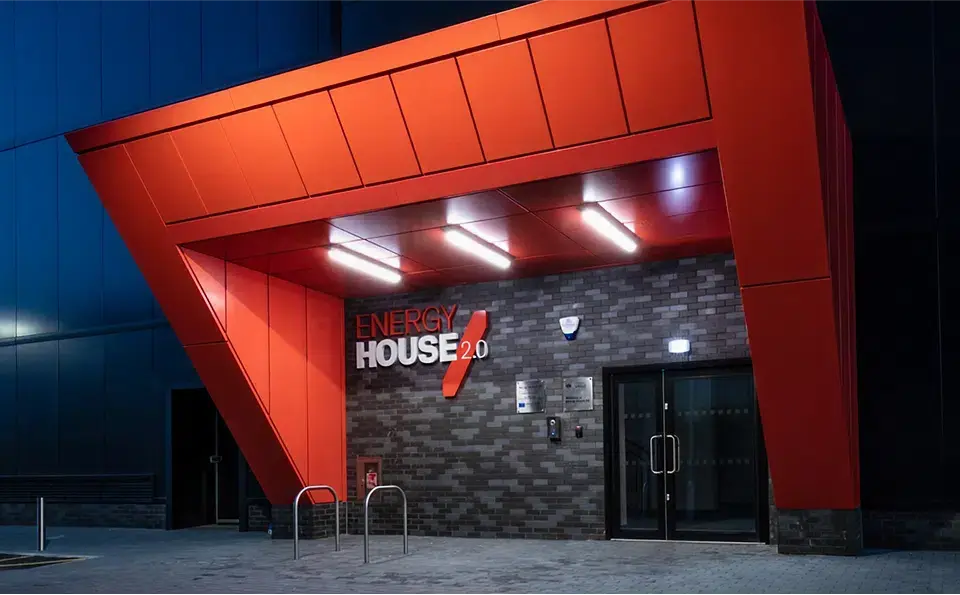
Energy House 2.0
case study

Energy House 2.0: Proving low-energy, high-quality ventilation for the Future Homes era

Discover how Titon’s HRV1.6 Q Plus MVHR unit helps developers and contractors meet the Future Homes Standards for future-proof new builds.

Energy-Safe-Logos

What ventilation system is required in a new build home?

New build homes require a ventilation strategy that provides adequate outdoor air and removes pollutants, moisture and other contaminants in accordance with the applicable Building Regulations. Depending on the dwelling and ventilation strategy, this may include natural ventilation, continuous mechanical extract ventilation (MEV) or mechanical ventilation with heat recovery (MVHR). The appropriate system should be determined during the design stage and designed, installed and commissioned in accordance with the relevant requirements of Approved Document F.

Is MVHR required in a new build?

MVHR is not automatically required in every new-build dwelling. The appropriate ventilation system depends on the building design, airtightness, ventilation strategy and regulatory requirements. MVHR can be particularly suitable for highly airtight, energy-efficient homes because it provides continuous supply and extract ventilation while recovering heat from extracted air. Titon provides MVHR systems for residential new-build applications, alongside MEV and other ventilation solutions.

What is the difference between MVHR and MEV?

MVHR provides both mechanical supply and mechanical extract ventilation, while recovering heat from the outgoing air to preheat incoming air. MEV continuously extracts air from wet rooms such as kitchens and bathrooms, with replacement air entering through purpose-designed background ventilators or other appropriate air paths. The most suitable system depends on the dwelling's design, airtightness, energy strategy and ventilation requirements.

Do new build homes need trickle vents?

It depends on the ventilation strategy used for the dwelling. Background ventilators are commonly used as part of natural ventilation or continuous mechanical extract strategies, but they should not simply be added to an MVHR system without considering the overall ventilation design. Approved Document F sets requirements for background ventilation, and the ventilation strategy should be established before installation.

What does Part F mean for new build ventilation?

Approved Document F provides guidance for meeting the ventilation requirements of Part F of the Building Regulations. For dwellings, Volume 1 covers ventilation requirements including the provision of adequate ventilation and measures to reduce the accumulation of pollutants and moisture. The current 2026 edition applies to buildings subject to the 2026 standards, while earlier versions continue to apply where relevant.

How do you choose a ventilation system for a new build?

The ventilation system should be selected as part of the building's design rather than treated as an installation-stage decision. Factors include dwelling size and layout, airtightness, occupancy, ventilation rates, energy performance, acoustic requirements, available space, duct routes, maintenance access and the applicable Building Regulations. For larger developments, early design input can also help coordinate ductwork, plant locations and commissioning requirements.

What is the best ventilation system for an energy-efficient new build?

There is no single ventilation system that is best for every new-build dwelling. MVHR can be particularly appropriate for well-insulated and airtight homes because it combines continuous mechanical ventilation with heat recovery. MEV and other approaches may be appropriate depending on the dwelling and its ventilation strategy. The system should be selected based on the whole-building design rather than energy efficiency alone.

What ventilation is needed for a new build house?

A new-build house needs a ventilation strategy that provides sufficient outdoor air and removes moisture and pollutants from areas such as kitchens, bathrooms and utility rooms. The appropriate approach may use natural ventilation, continuous mechanical extract ventilation or MVHR, depending on the building design and applicable regulatory requirements.

Does an airtight new build need mechanical ventilation?

A highly airtight home still needs adequate ventilation. In fact, as uncontrolled air leakage is reduced, designing an effective ventilation strategy becomes increasingly important. Mechanical systems such as MVHR can provide controlled continuous ventilation in airtight homes while recovering heat from extracted air.

What is the difference between natural ventilation, MEV and MVHR?

Natural ventilation relies primarily on purpose-designed openings and background ventilators to provide airflow. MEV uses mechanical extract fans to continuously remove stale, moist air, with replacement air entering the dwelling through appropriate air inlets. MVHR mechanically supplies and extracts air and transfers heat from the outgoing air to the incoming air.

Does MVHR comply with Part F?

MVHR can be used as a ventilation strategy for dwellings designed to meet the requirements of Part F, provided the system is appropriately designed, installed, commissioned and operated. Compliance depends on the complete ventilation system and its design and performance, rather than simply selecting an MVHR unit.

What should be considered when specifying MVHR for a new build?

Key considerations include required airflow rates, dwelling size, system efficiency, acoustic performance, ductwork design, pressure losses, unit location, access for filter maintenance, controls, commissioning and integration with the wider building design. Designers should also consider how the system will perform once installed rather than relying solely on the nominal performance of the MVHR unit.

Support

Related resources

Helping you make the right ventilation system decisions for your project needs.
Next Steps

Streamline your project with Titon’s expert guidance – from consultation to delivery, we ensure your ventilation system meets compliance, budget, and timeline requirements.

Choosing a ventilation solution is easy

1

Consult

Speak with one of Titon's solutions consultants for expert guidance on your project.

2

Propose

We'll provide you with a proposal plan to help you deliver your project on time and in budget.

3

Deliver

From our UK manufacturing centre we will deliver the solution you need, where you need it.